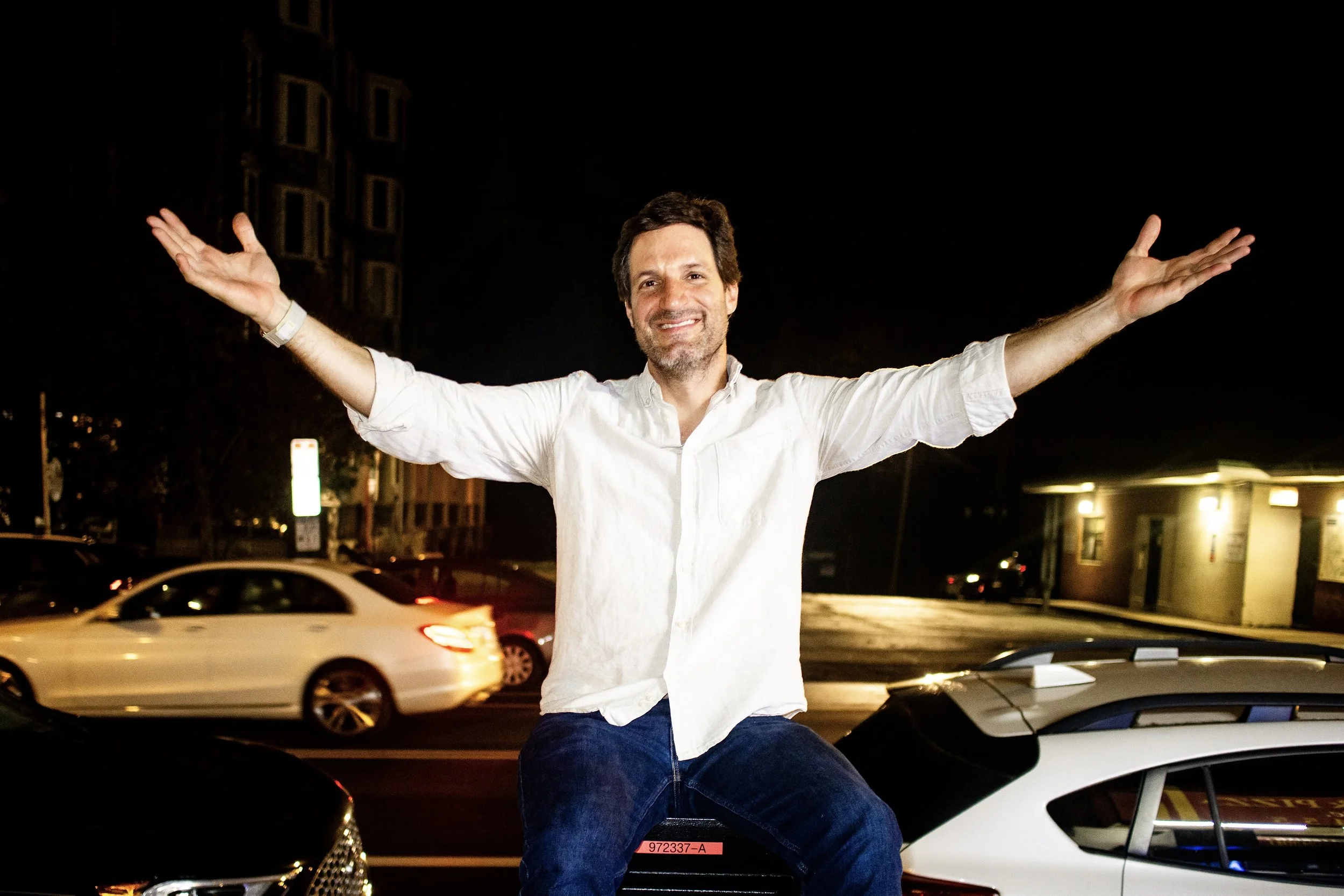
For Sure: With Jaime Salm
Penned and Pictured by Philip David Cobb
I texted Jaime around 11:30 that Wednesday morning. It was the kind of placeholder message you send to get onto someone’s calendar, eventually. I expected a reply maybe that evening, or the next day, if at all. He’s a busy entrepreneur who runs two ventures.
Fifteen minutes later, he wrote back: he could meet that same afternoon at 2 PM. That left me about two hours to consolidate the notes I’d been jotting down throughout the week.
We met at a coffee shop to continue a conversation that had started a few days earlier at a park in my neighborhood. I was there with my young son when I met Jaime, who was working on some new installations: play structures built around learning and exploration for children, the kind of engagement every parent wants for their kid. I asked about the project and his role in it, and the exchange turned into a much larger conversation. I learned about his family’s roots in Medellín and his grandparents’ move to Miami in the 70s, where he’s based today. He came to Philadelphia for school, drawn to a small design program, where he studied industrial and product design.
Originally, Jaime saw himself fully as an artist. The practical path won out, and he’s quick to downplay the degree itself, though he considers the experience around it invaluable. He still says he probably should have stuck with art, because you only get one life. But the artist never fully left. He has since reinvested that sensibility into his work.
Today he runs two ventures with his brother Isaac. MIO Culture makes modular acoustic products, such as room dividers and wall panels, built from sustainable materials and made in the U.S. It's a steady operation that, by design, remains small. FutureTogether is the consultancy arm, a strategic design studio that helps organizations build sustainability and social impact into what they do and make. The park project sits at that intersection.
At the coffee shop, Jaime explained more about his work and showed me some of the projects in the pipeline. He told me that he and Isaac were narrowing their focus. They'd spent time taking on a range of social impact work, but found themselves drawn to certain projects more than others. For now, that meant concentrating on civic engagement and work with local governments and communities. The park was an early example. Scaling isn't the exact goal, either. He shared an analogy with me: you can sell millions of items for 25 cents, or three for $2 million. He's choosing the niche route.
When the conversation turned to the financial side of the business and where it was headed, I could tell he’d already thought those questions through. Then he offered a thought: he likes nice things just like anyone else, but a good life, to him, is being able to move freely across the spectrum, from the simple to the extravagant, without needing to live every day at either end.
When I asked where he sees himself and the business in the future, I expected a plan. Instead, he said, “No one does something forever. This is what I’m doing now, and it feels like the right path.”
I’ve been interrogating that answer ever since because it delineates between two ideas we typically treat as one: having things figured out and being sure of yourself.
Having things figured out suggests a conclusion. It’s a destination, a timeline, an answer. Being sure, on the other hand, is a relationship with your own criteria and values. One is about knowing where you’re going; the other is about trusting how you make your way there.
Jaime's version of it shows up in small, concrete places. He rejects traditional working hours and hustle culture alike, a shift that began during his time in Miami, where being close to family and becoming more aware of his parents getting older changed how he thought about time. He's also a founder running two companies who found the time to sit down and talk with me, a stranger. In my experience, that rarely happens.
The distinction matters because plans can be useful, but they’re also fragile. They will almost always break down or change in some way. Sureness doesn’t need the future to cooperate. It allows you to be decisive, to say no unapologetically, to walk away from what no longer fits, and to keep moving while the destination remains unclear.
I showed up to the coffee shop on two hours' notice, and I learned that although Jaime said he hadn't done it to me, being offered a quick turnaround to meet was a test he'd faced before. Once, when he was trying to meet a council member about a project, the council member offered to meet that same day, giving Jaime just hours to sharpen his pitch deck. The council member explained that it was a filter, a way of testing who was serious and prepared for their time. Jaime said it wasn't something he'd done to me that day, but it was a tactic he'd kept in his own arsenal. This time, he said, he simply had the time to meet with me. I could debate that, but I thought the discernment behind the tactic was brilliant.
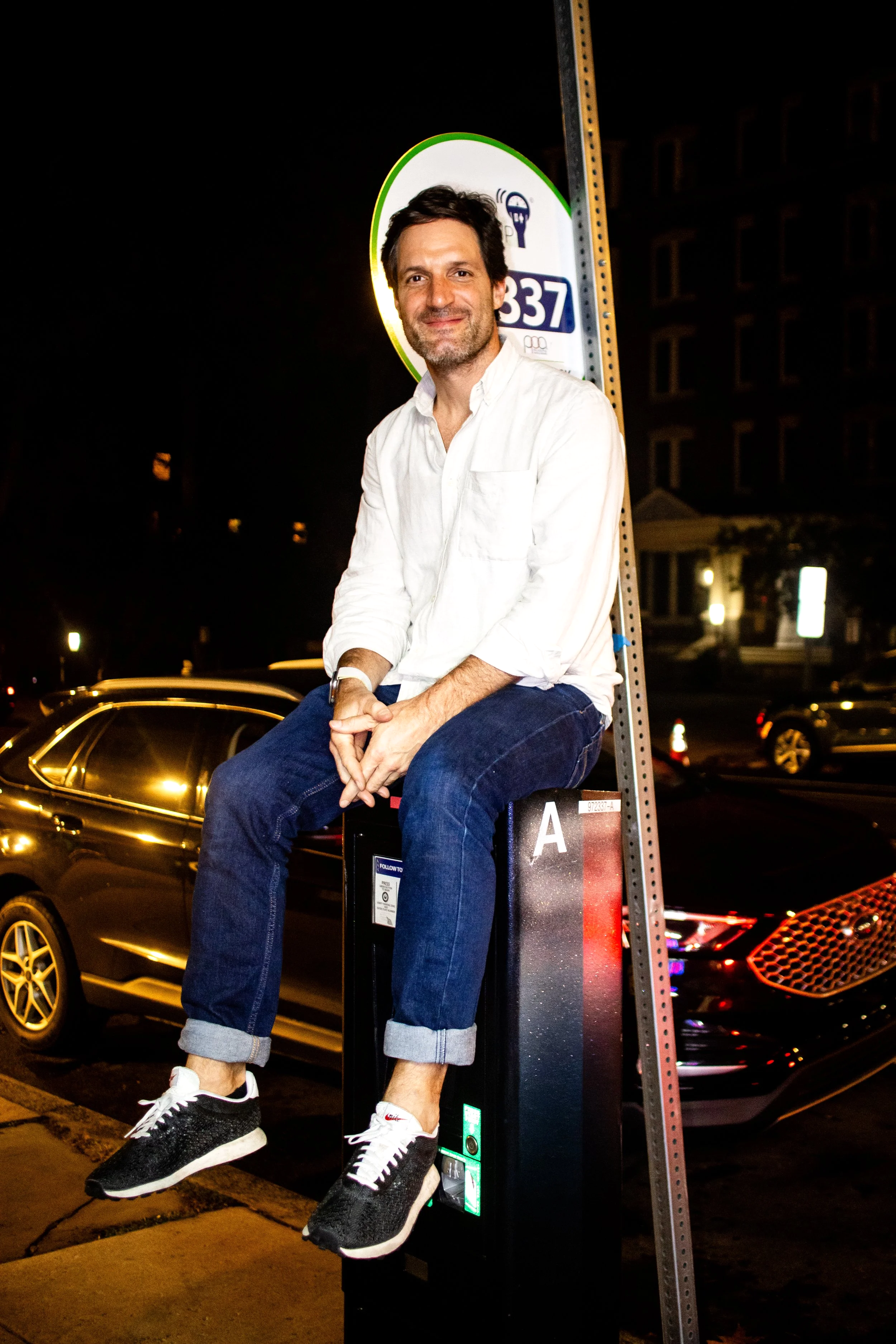
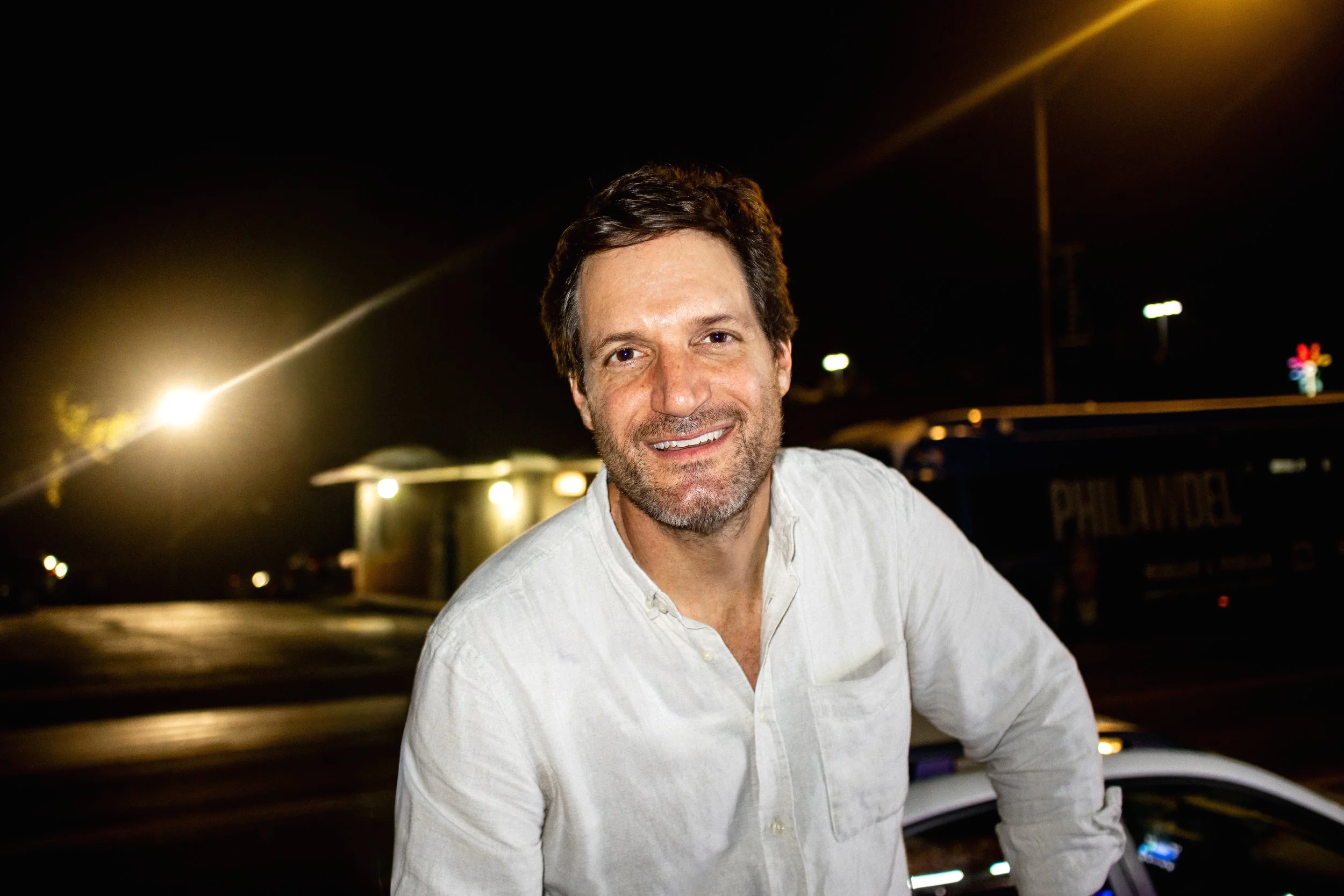
I caught up with him again recently at a community event one evening, where his team and others were gathering input from residents on inclusive installations for a new trail opening next year. Partway through, we were able to step outside for a few photographs. As I was getting ready to pose him, he looked over at a parking meter box, said, “right here”, and climbed onto it where we got some shots. It was the same energy I'd seen across the table at the coffee shop: quick, open, already moving.
Personally, I’m certain that I’m still figuring a lot of this out. But figured out is where you end up. Being sure is how you get there.